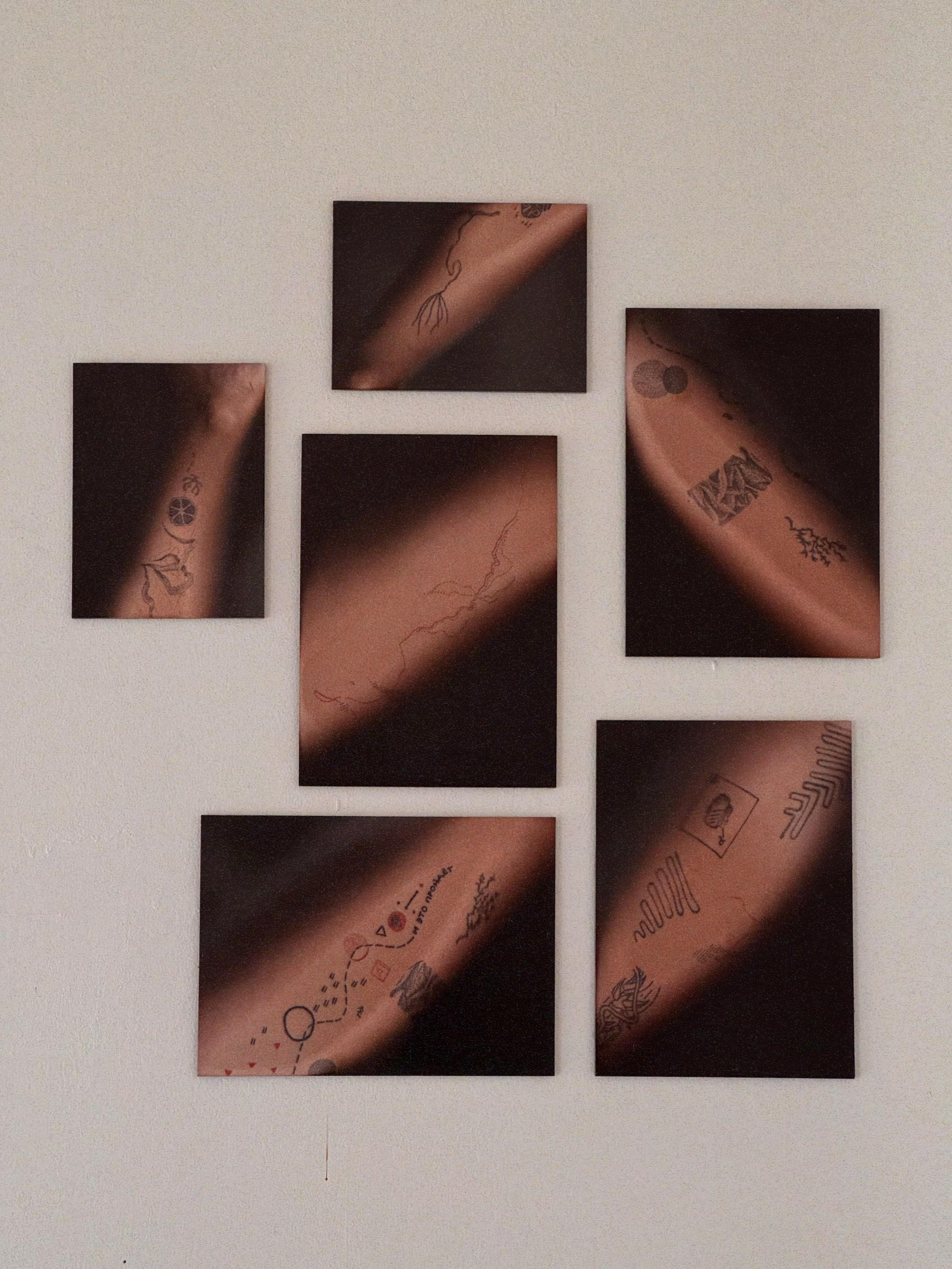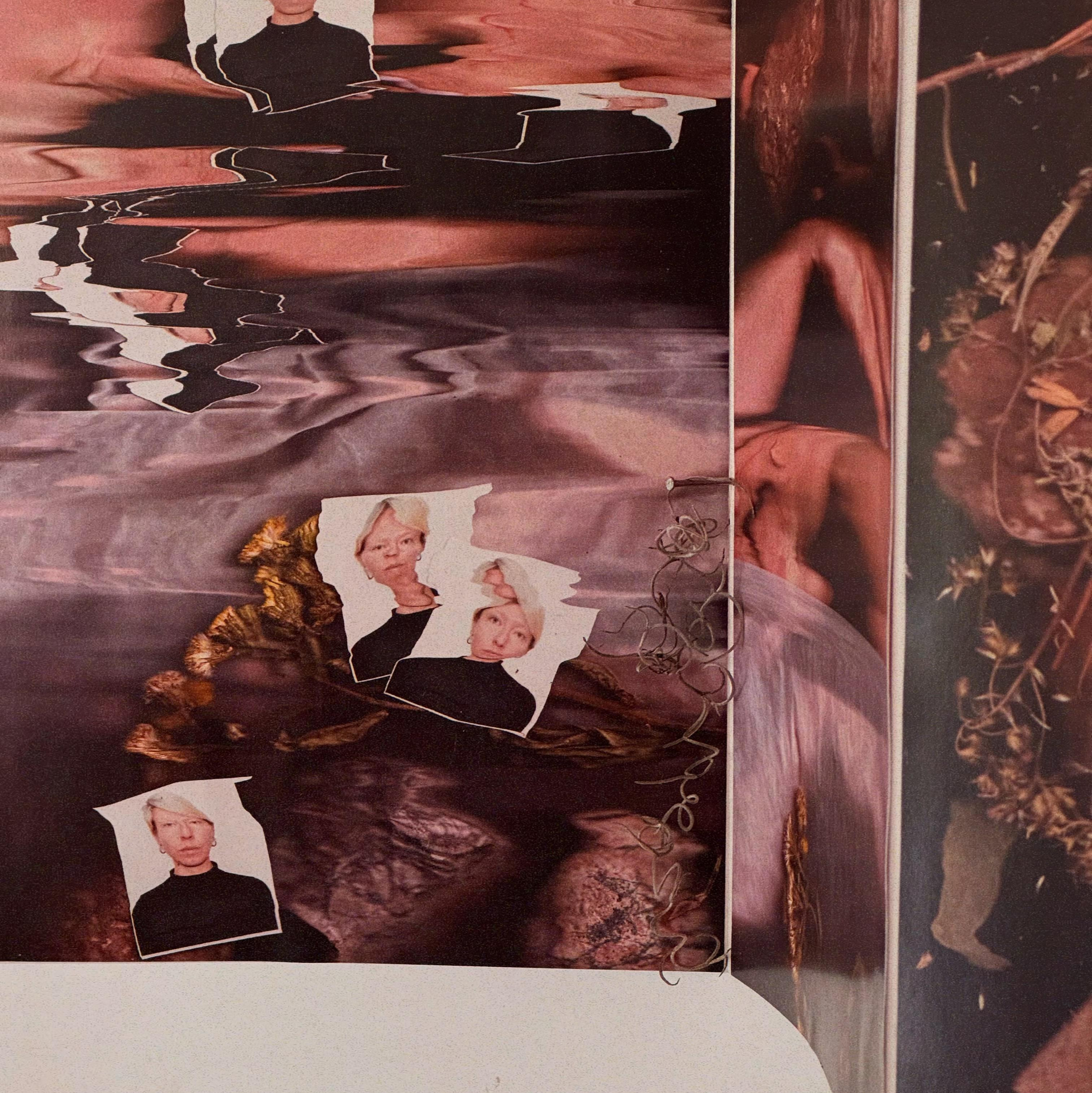
«Sediments and fossils» — a project made as part of the art course of Diego Arregi
A research project that ask a few question:
«how to see your own history the way we see the history of an ecosystem?»
«could scientific lens be gentle to the one we are studying?»
«could we apply that scientific lens to a human without detachment?»
«how to comprehend a complex political reality through personal experience?»
In that project Xena is studying two things at the same time — first, how useful is the approach of natural sciences to alive object, and, second, how to tell your own vulnerable story using artistic/scientific tools.
Key words:
geological layers of time; personal history as a layers of sediments; body as a fossil, as an exhibit, as a map; tattoo as a archeological/geological data; a detachment of scientific methodology; detachment to handle the political reality


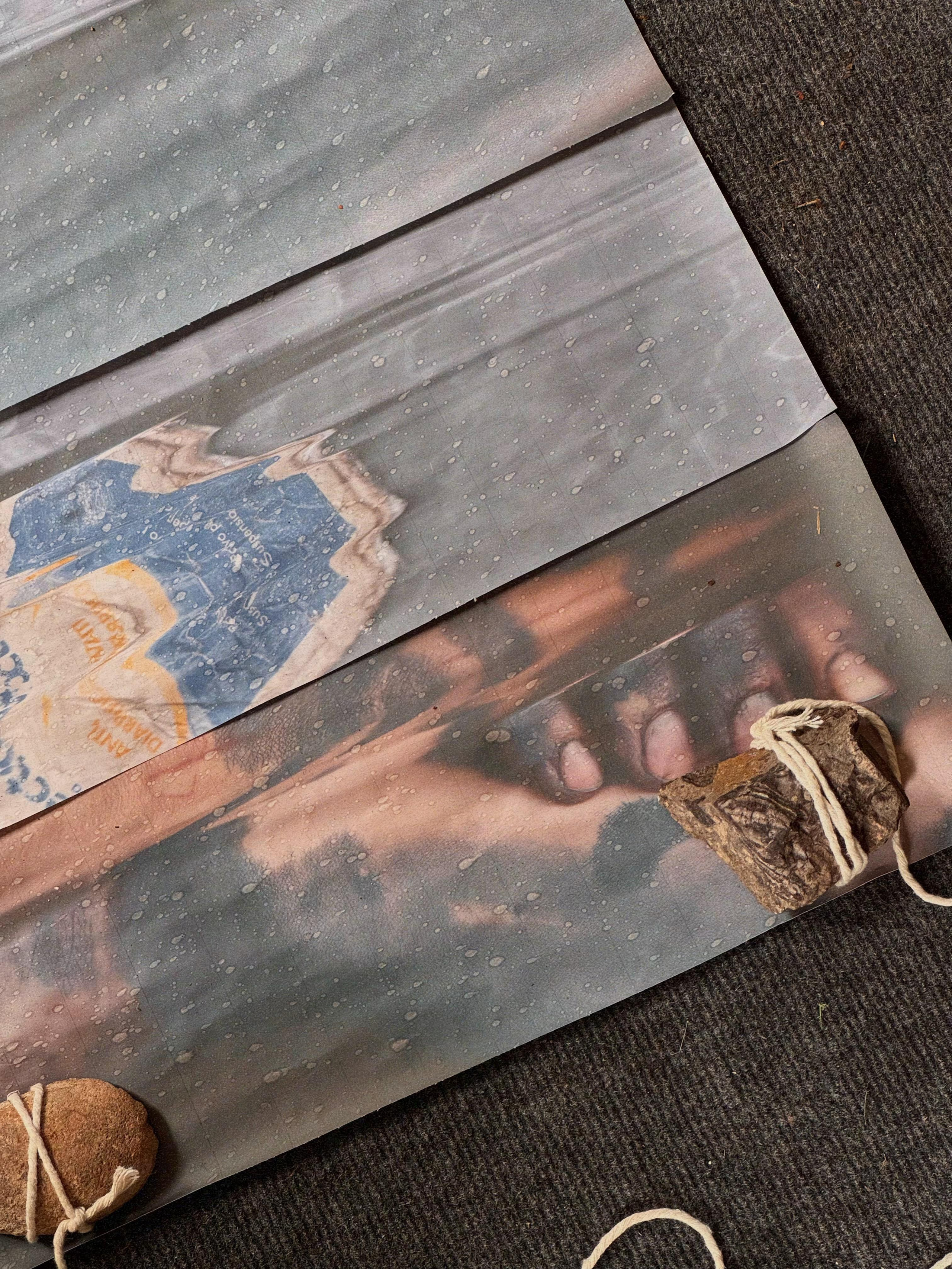
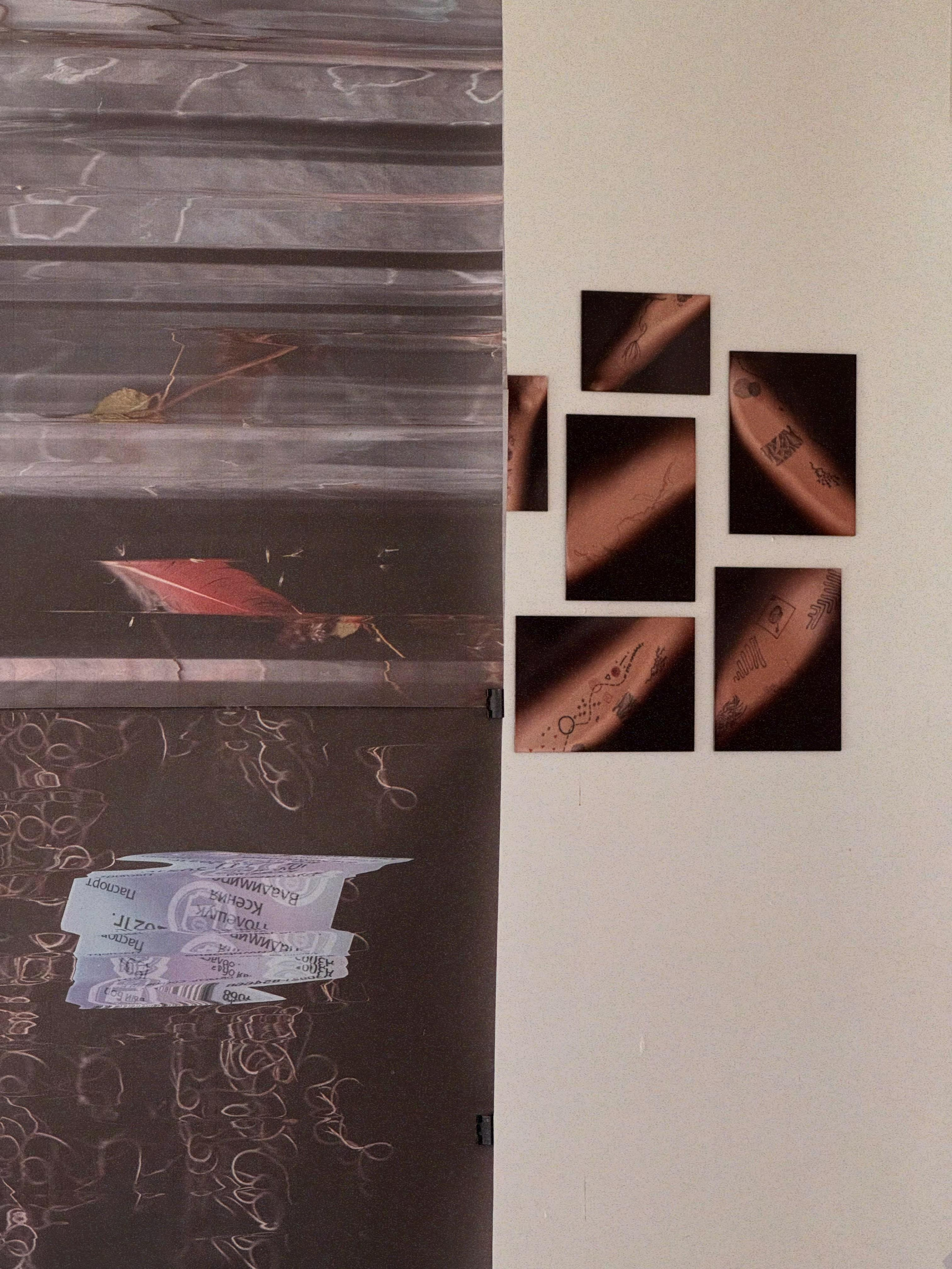
In that galleries you can find experimental visual materials that was turned into 10 meter geological outcrop, cut in three parts, each of them telling the story of the immigration and change that was happening during the adaptation.


Fossils and mummies
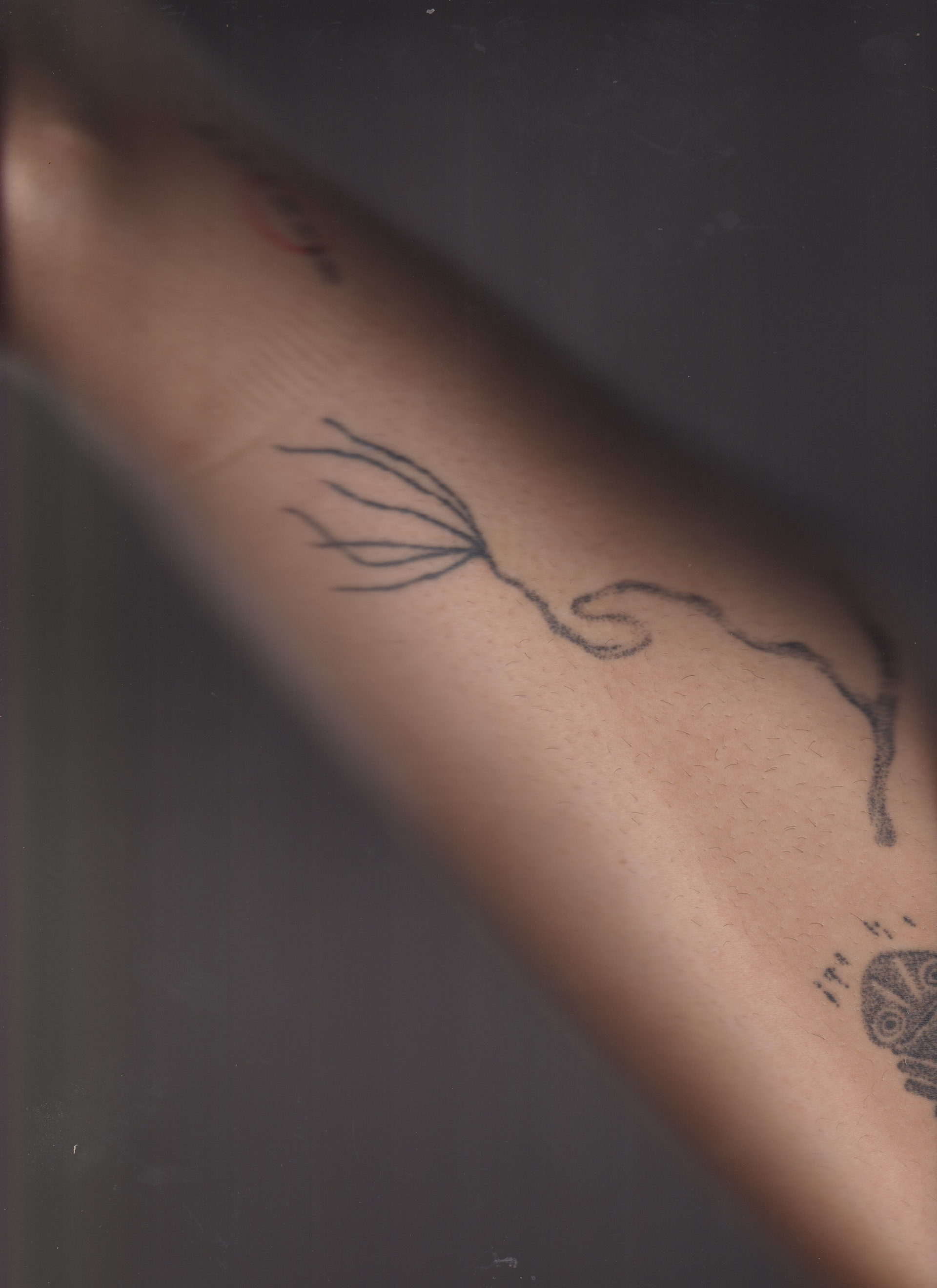
Here I invite you to see the body covered in tattoos as an archeological object, a mummy with its history written on the skin.
All that tattoos I was adding to my body during the immigration, all of them reflect certain moment of growth, dificulties and change.
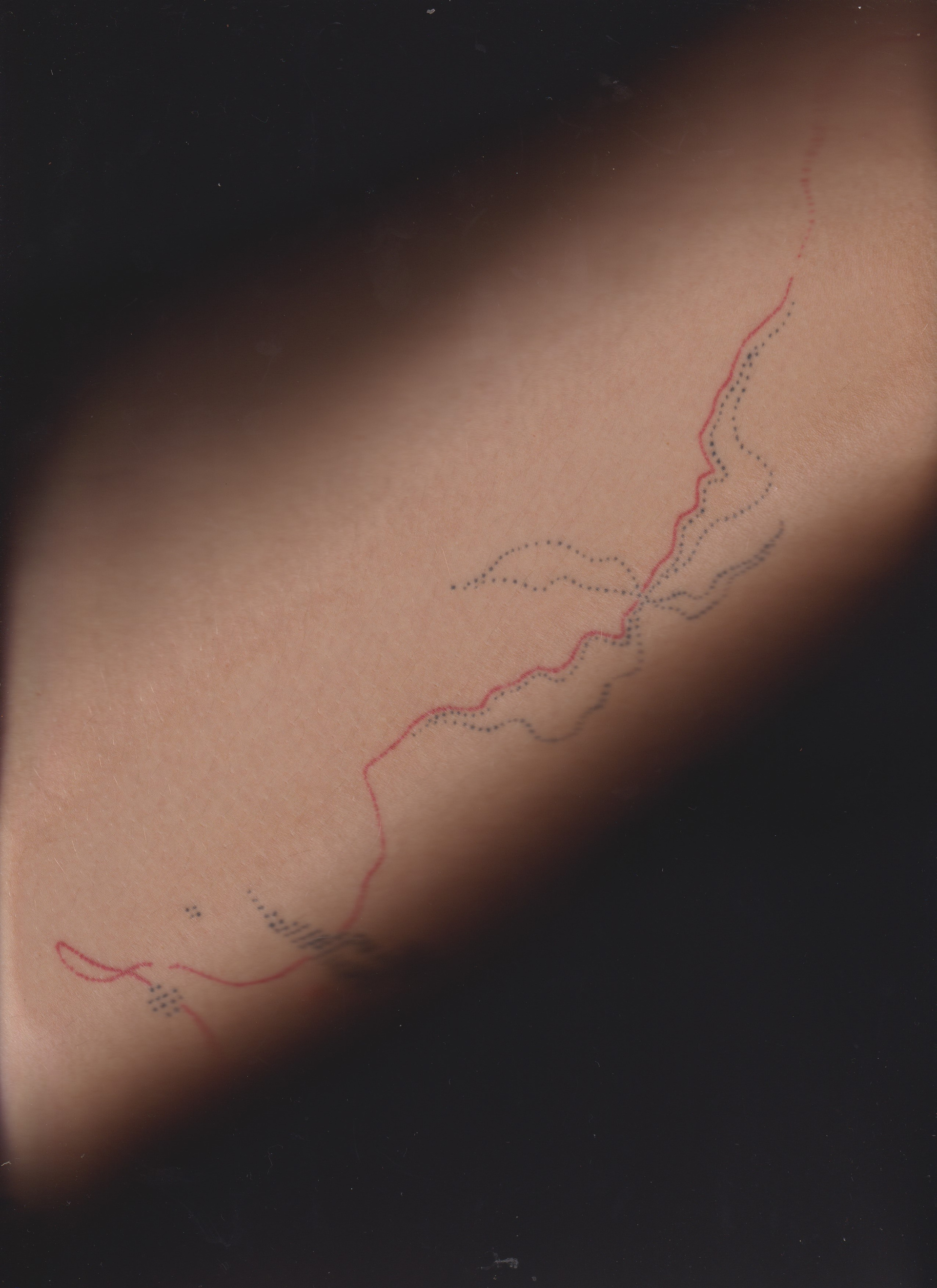
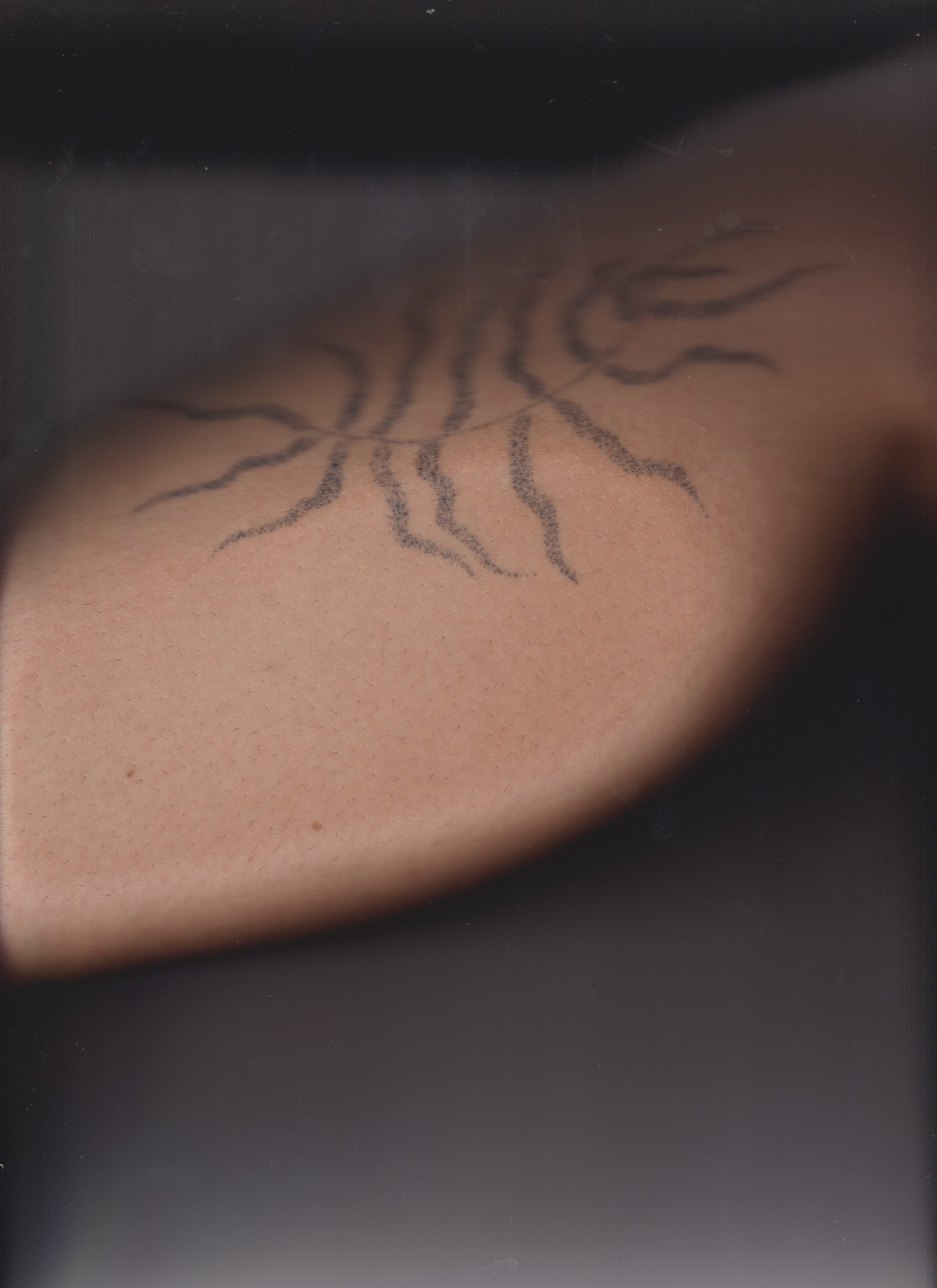
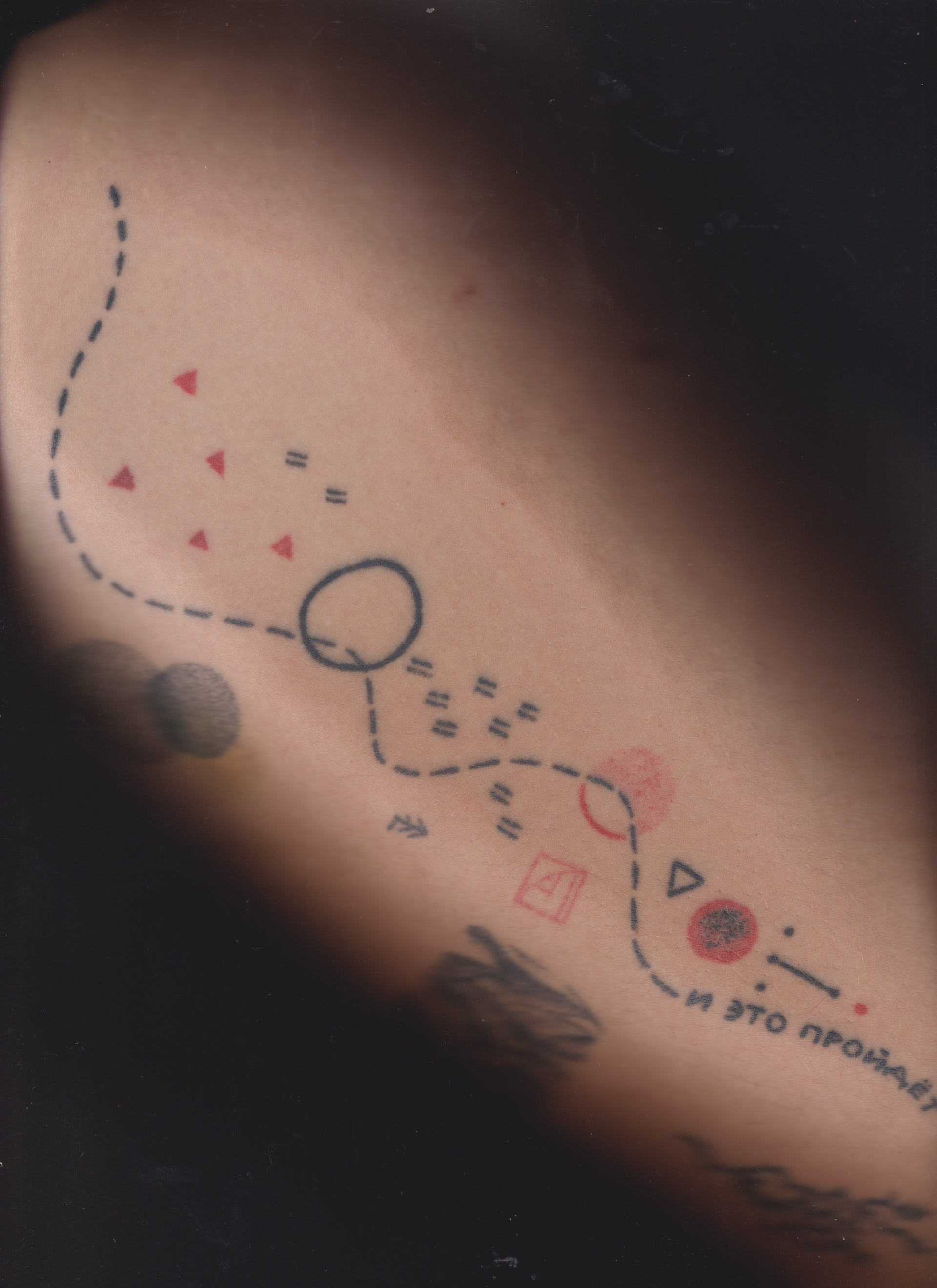
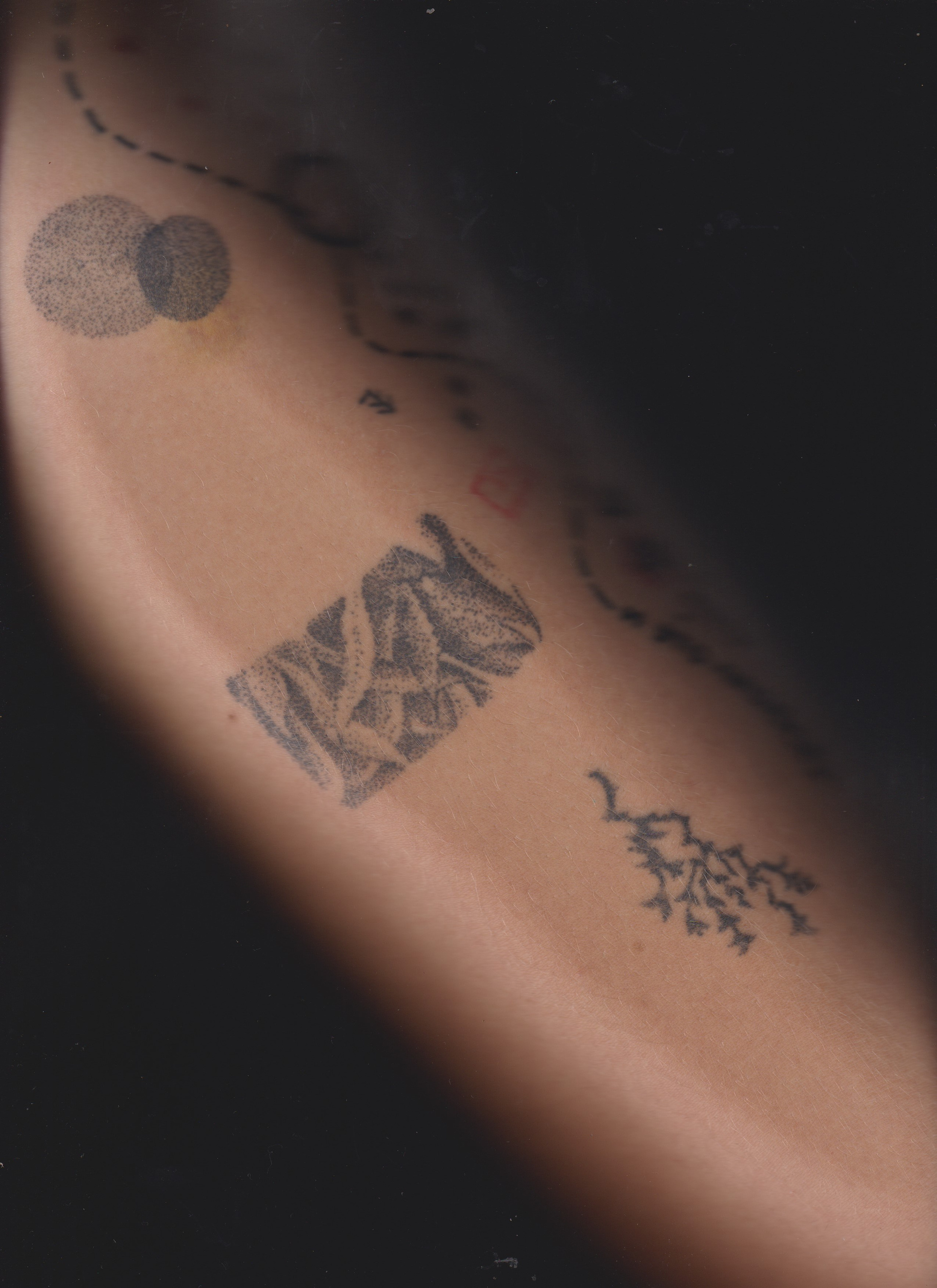
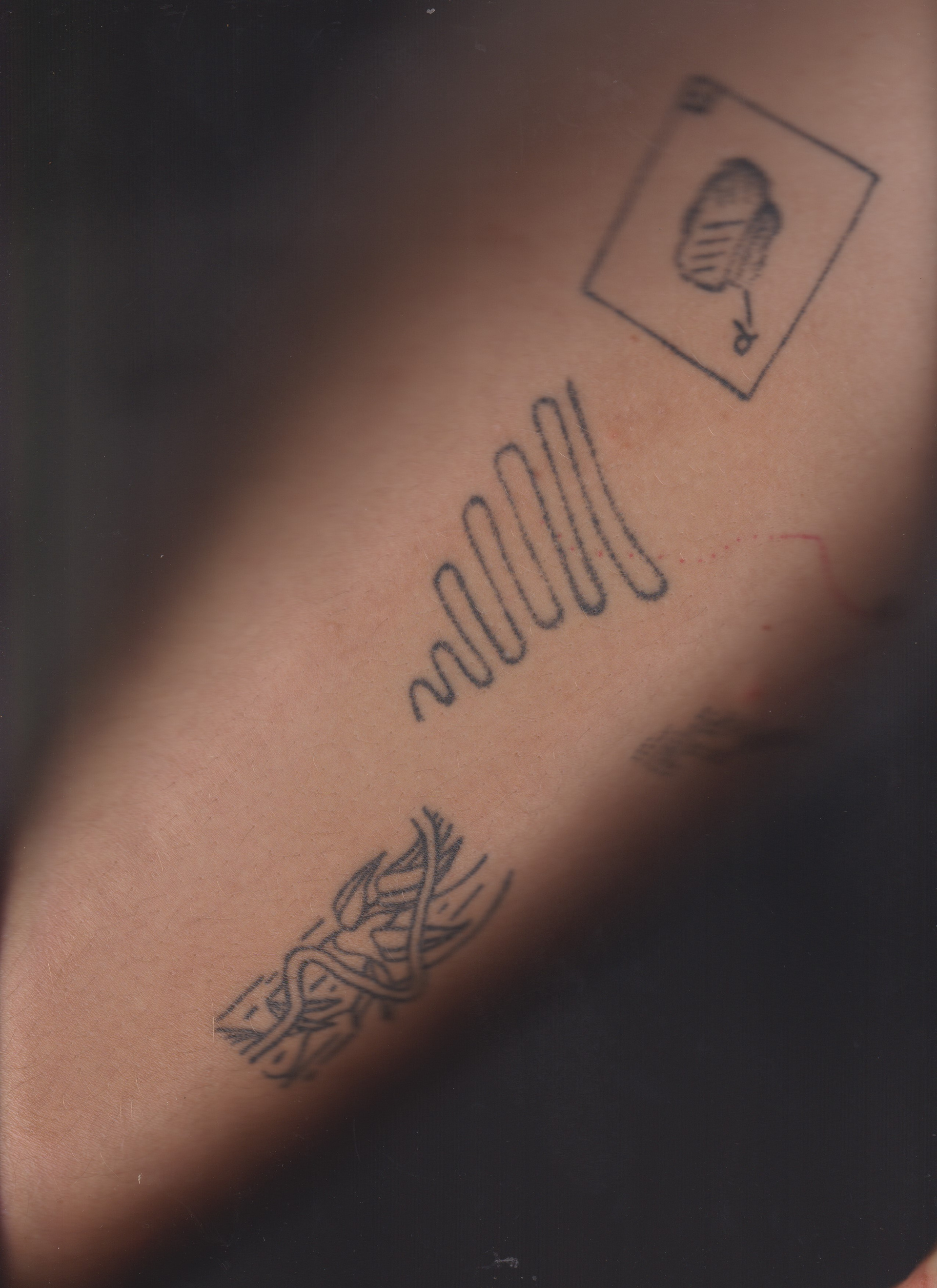
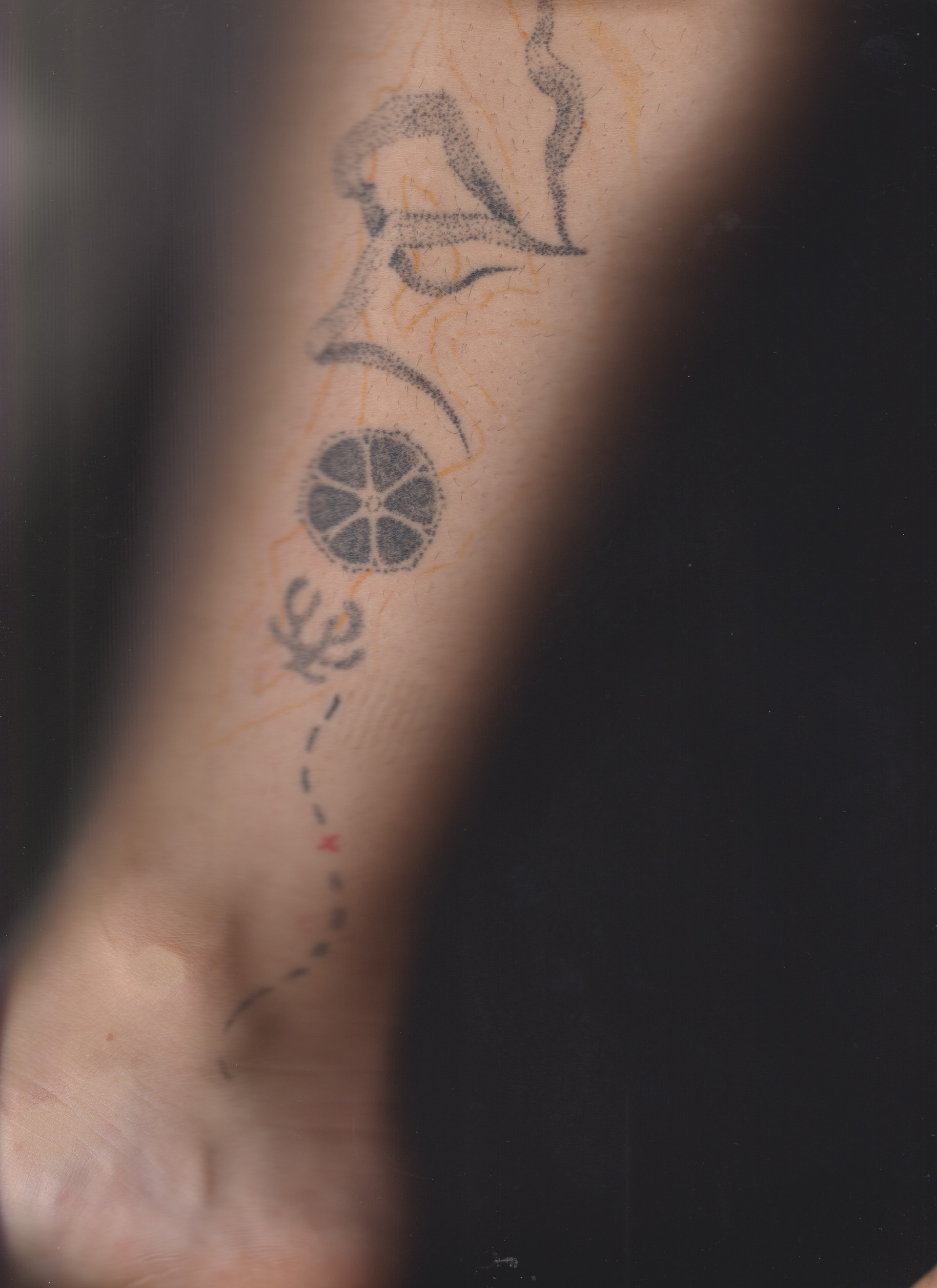
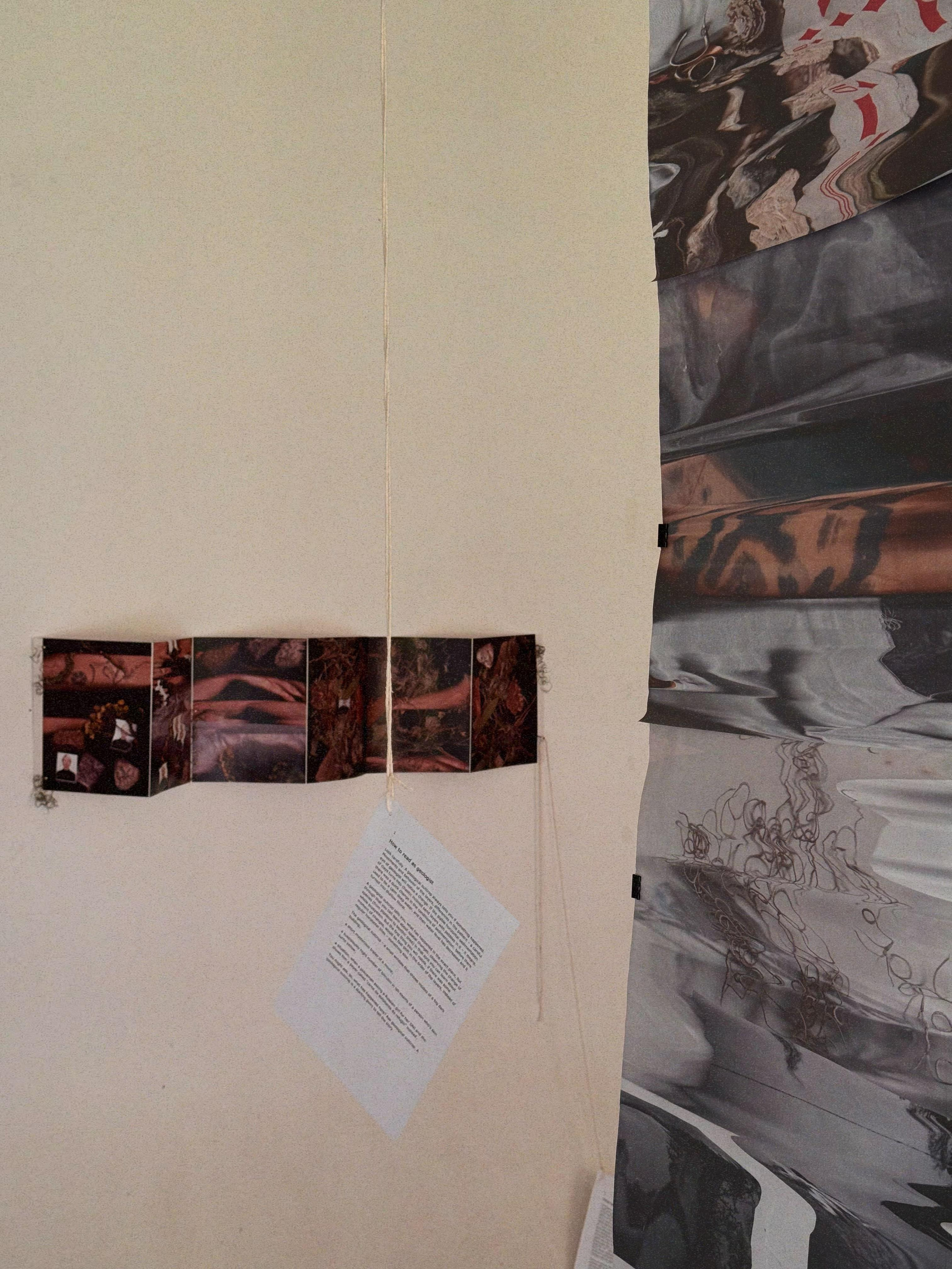
An important part of the exhibition was texts, connected to each sediment outcrop, written in english, russian and spanish. Below you can find the texts in english, each of them could lead you through the history of the object of study — my immigration.
How to read as geologist
Look carefully. A geological outcrop always tells you if something happened. Movements and behavior of the layers, differences in the pattern — a careful eye of geologist will notice a change. If the stable horizontal sedimentation of clays turns into chaotic inclined sand layers with pebbles in it — it means, there was a quick change in the conditions of sedimentation: before there used to be a calm deep water, and then water level has decreased and it turned into shallow litoral.
A geological outcrop tells you, what has happened in the exact place, but through that you can learn about spatial changes: observing the change of species (from plankton to benthic ones) in that spot you can learn about whole ecosystem. But the first thing you will notice, if there was some moment of changes, would be fast shift in the order of the layers, instead of regular horizontal lines — something else.
The geological outcrop — a small window that shows insides of a big dark building; a short mysterious trailer of a movie; a suspisiously hight number of bilirubin in lab exams of a person who’s skin turns yellow; a situation, when a policemen asking a Russian girl for her DNI and she shows him a paper called «carne de solisitante de refugio» instead.
You might ask, so, what has happened here? Ask geological outcrop. A geological outcrop is a starting point to tell the story.
The pledge
This old soviet novel was my instruction-to-life pillowbook when I was early teenager. It talks about little boy becoming a heroic pilot going to faraway arctic island to find remains of lost expeditions. My mom was the one who was giving me books to read, and that one was clearly from her. This book showed me the level of dedication and sacrifiction I was only dreaming of: a little boy promised himself to find an expedition that got lost in Arctic, and he fulfilled his promise. Even more, while being little, this boy and his friend wrote a pledge — to fight and to seek, to find and not to give up.
Many years after, when I forgot the book but never forgot the pledge, I stranded on the same faraway arctic island that was mentioned in the book, an island with a very soviet name — Bolshevik, one of three islands of Severnaya Zemlya archipelago. It was my first expedition and I had to prove not only to me, but my bosses as well, that I can fight unbearable conditions of forgotten polar station, can seek for geomorphological evidences of past sea level changes during fieldwork, can find strength to handle a month on the diesel tanker on my way home and can not to give up without knowing when I will be back.
Surprisingly, even though my southamerican migration was not much easier than that expeditions, this pledge become irrelevant. Have to admit, though I am very grateful to that soviet lesson, I am learning another lesson now. This time I am doing an excersise of unlearning:
To fight feelings,
To seek for my old home,
To find my place to stay
And not to give up my previous identity
Indirect method
In a faraway land close to Baltic sea, between modern Russia and Estonia, 5 000 years ago there was a community of fishermans. This community left us their ceramics — the cultured called «yamochno-grebyenchataya», by the patterns on the ceramic, holes and lines, «yamy» and «grebny».
That people lived on sandy dunes and terrasses of antient sea shore. I was the one who studied that sea shore formations: beautiful dynamic dunes, bars, terrasses etc. I used to work in one of archeological expeditions there as a geomorphologist. Though I was specialized to define the origin on different geomorphological formations, but I not always was able to identify the time period when that formation appeared. In opposition, archeologists knew exactly when their ceramics was made, but struggled to find it easily. Archeologists and us, geomorphologists, created beautiful, ecosystem-like symbiosis: we — geomorphologists — were looking for specific landscape forms, where supposedly that culture lived, then they — archeologists — was looking for ceramics there, and in the end of the fieldwork we had both — formation AND the age when it was inhabited by that culture.
That is an exciting way to look at indirect method of study an object: from ceramics left by people we could learn about their environment, from the environment they needed to live in we could learn about their everyday life. That’s how you can tell about an object through its artefacts.
An exercise: try to read the artefacts and tell the story from what you see.
Pay attention to:
— The level the artefact was preserved; if you see only particles of objects it can tell about what was happening in the moment of accumulation or after;
— The conditions of surrounding artefacts/environment; what kind of sediments surrounds the artefacts can tell us about the condition this object was living in;
— Sequence of the layers, how the pattern change with time (that is relevant for outcrop as whole and for separate artefacts; if you read the outcrop from the bottom to the top you can understand the story from its origin)
Guided nostalgic meditation
A local train starts to slow down and will be rolling by a station the way you can easily notice cracked asphalt surface of a station and wires between poles that has been accompanying you whole hour and a half from Yekaterinburg station. To the left you see a lake with islands of grass, most likely there will be ducks hanging together, perhaps swans. To the right you see apartment buildings of late soviet time, descending the gentle sloping mountains covered with green pinetree forest. While arriving you notice few specific details: old metal letters at the roof of the station will say «Verkhneivensk», concrete wall between the railroad and the town remind you that you see closed town Sverdlovsk-44, and the map defines your location as Novouralsk.
At the checkpoint you meet grandfather and (if we are imagining the past) grandmother, they give you your entrance document, a little blueish-purplish plastic card, which you show (annoyed, because you was born here and still need special document every time) to a woman in a little window. As soon as you pass through the checkpoint you feel tenderness, your counciousness is jumping between the one 25 years ago — and now, trying to comprehend the feelings about those concrete blocks you are staying on, those stairs to the hill, those buildings next to the forest, this gentle landscape and quickly aging town.
There will be mixed emotions:
1. a town separated by the wall from its environment;
2. a town where I was born and should feel part of that soviet factory romantics;
3. a town surrounded by the wall, where my all time favourite activities are opposed to its wall, for each of that activities I had to leave the wall:
— «vodnaya», a pond where me and my grandma was swimming and taking sunbaths, a ritual we had during many years;
— the forest, where we was going almost everyday to pick berries and mushrooms with grandfather;
— Seven brothers, an outlier, a unique magmatic rocks we have visited few times with whole family, a rock that represents my first encounter with breathtaking beauty of nature.
That’s the town where I was spending my summers according to my grandma scenario, lazily, doing her activities, but more and more playing along while getting older. I remember, I was taking her by the arm and we was slowly walking to pick «irga», a berry from the bushes planted in the specific corner, or «ryabina» berry from the alley, if the birds left us something, or to buy a warm bread and to feed half of it to the birds while walking home or exchange forest treasures — blueberries, forest strawberries and mushrooms — for garden tomatoes, green onion and perehil from a familiar gardener, or walk around the town in our favourite clothes, she called it «forsit’», which means showing ourself, now you would call it — to slay.
In that city I will never understand if I am embroided forever in my motherland, feeling love and nostalgia — or I am afraid of its concrete, asphalt, this «soviet plan» reality. This town is full of trees and pieces of forest, because it was built by soviet plan in 60-70s. It is cute and cozy, with alleys, benches, parks; (because) it was a place for enrichment of uranium for nuclear power plants and military complex. Everytime I would think of it, I would imagine its unfriendly walls and same time almost cry from tenderness.
Descansos/Putevyje kresty
In a book, that are my pillowbook nowadays instead of old one (see part called «the pledge»), «Woman who run with wolves» by Clarisa Pincola Estes, the author shares the idea of descansos — little white crosses that you can meet in Mexico on some roads. Even though that crosses means place to rest, she interpreted it in her poetic way, as a memorial of the memories you had to rest with, as a way to attach your stories or things to the ground so it no longer follows you.
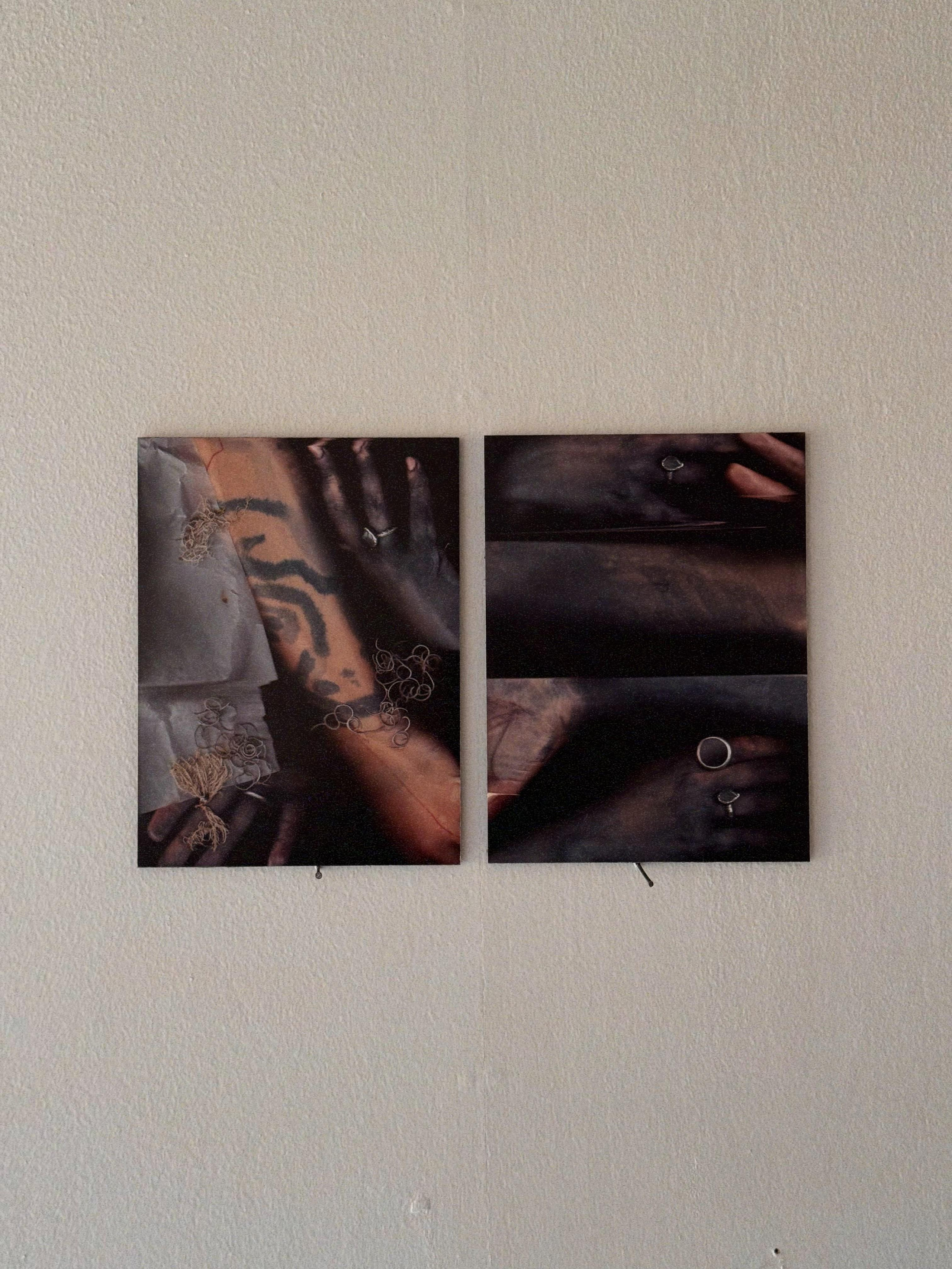
I am making those visual pieces as my descansos. With it I attach my valuable things, rings, rocks, plants, documents and gifts to the ground, to the darkness of the scanned picture. I attach it to the moment when I used that machine, kindly given for use by Diego A., to scan my reality — and so I can notice myself. Same way a person with body dysmorphia needs to reflect themselves in the mirror so they know how they looks like. So here I am, scanning my memories to attach to the ground — already that, Peruvian, ground — all my sicknesses, all the people I lost connection with, all the harsh conversations with my mother, even my lost hope to come back to Russia soon. And then, when its attached, I can cry over it; and then continue walking to the next Descanso.